The title of my podcast is “Security 101 for Gen Zers.” This podcast is all about the ins and outs of security, on and off line. As we have found ourselves in the Digital Era, security has been a hot topic that holds a lot of importance in this day and age. We have seen stories in the media about things like security breaches and our personal data being used against us while used for profit by tech companies.
This episode of the podcast is all about password management. I asked Bill Danigelis, my father, who is a Strategic Account Manager at a tech company called Onapsis, to share some expertise about the topic.
Key terms: Password Manager: software application used to store and manage passwords Credential Stuffing: a type of cyberattack where stolen account credentials are used to gain unauthorized access to user accounts through large-scale automated login requests
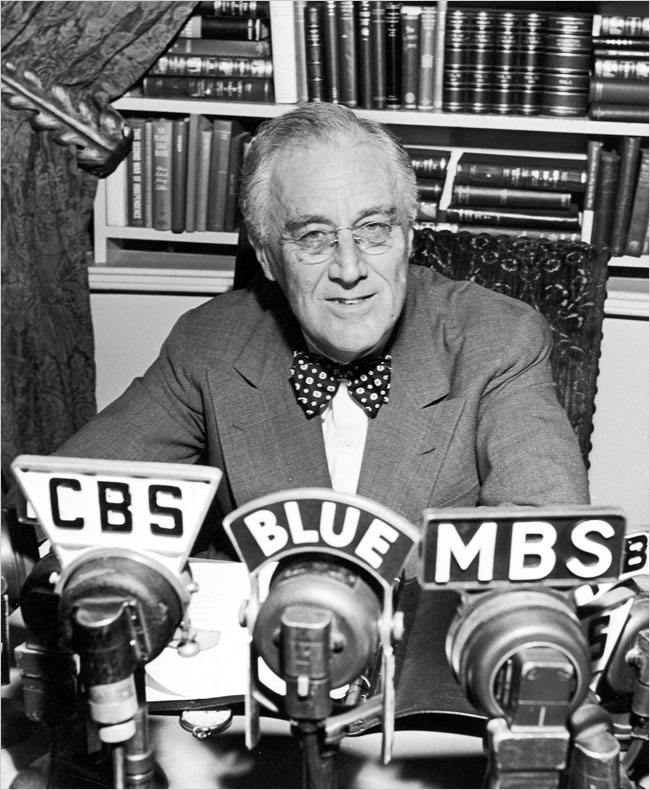
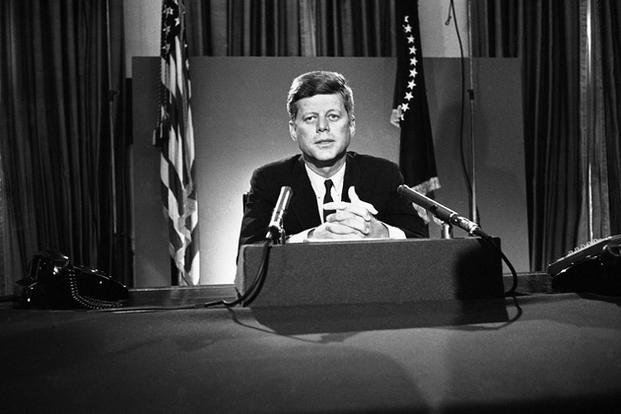
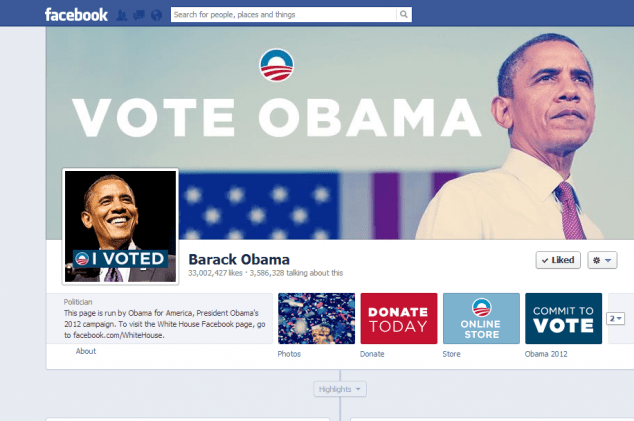
The ways that politicians campaign and govern have been changing in recent years. Meaning, the tools that they use and the ways that they use them in order to connect with the American people. When it was Franklin D. Roosevelt, his main tool was the radio. When it was John F. Kennedy, his main tool was the television. When it was Barack Obama, his main tool was social media.
Round one of social media in politics and the first digital strategy played was in Obama’s 2008 campaign. He recognized that most people are truly not interested in politics, but they are interested in topics that affect their lives that can be connected to politics. In order to get their attention Obama needed to directly speak on things that people cared about. Obama knew that the future of politics needed to be addressed to individuals, maybe groups but not everyone in society and he used social media in order to do this. The outlet that worked well in his campaign was Facebook because he had the platform’s co-founder, Chris Hughes, on his team, who was 24 years old at the time. On Facebook, Obama was able to connect to Generation Y, or people who were born from about 1980 and 1995. This was because Generation Y tended to not trust television and conventional political speeches. Obama understood that an important part of a political speech is not developed on political forums. This is why he became a member of many other platforms as another user, to speak with people and listen to them about what they wanted. Additionally, he created MyBarackObama.com for users to create groups in order to discuss and debate their points of view and opinions. On this site, people could also communicate directly with Obama’s team about things they did not like and he was able to change his approach. Today, that site is called BarackObama.com. Overall, the point of this is not to say that Obama won in 2008 solely because of social media. The truth is that he combined Politics 1.0 and 2.0 in order to attain his goal. Some of the tools that he used were his slogan “Hope,” going door to door, merchandising, MyBarackObama.com, responding to his followers on Twitter, his 6 million Facebook friends, free advertising on YouTube, and his blog that was posted on 10 times a day at least. Obama then carried his social media use into his term after he was elected.
Round two of social media in politics was when Obama ran in 2012. Obama upgraded his social media platforms to match with the times. He used Facebook, Google+, Pinterest, Tumblr, YouTube, Flickr, Instagram, Spotify, and his two twitter accounts that were @BarackObama and @Obama2012. His opponent, Mitt Romney only used Facebook, YouTube, Flickr, Google+, and Twitter. To compare their reach on Twitter, Obama has 21 million followers and Romney only had 1.5 million.
We interrupt Trump ranting for a statement from the candidate who actually got the most votes in 2016. https://t.co/ZsJtgnALdn
Round three of social media in politics was the extremely controversial campaign of Donald Trump in 2016. Answering the question of whether or not Facebook was the reason for Trump’s win is more complicated than a yes or no answer. Most news outlets supported Hilary Clinton or avoided supporting Trump but this was obviously not relevant. Social media, especially Facebook, polarized the points of view of the voters due to the algorithm’s use of filter bubbles in order to give people content that they agree with. This is where fake news surged because there was no clarification. At the time more than 160 million Americans used Facebook. During the presidential race, mainstream news had an engagement of over 7 million, but fake news had an engagement of over 9 million. I have seen this first hand with my grandmother and her friend’s use of Facebook. More often than not, my grandma is posting some crazy and extremely political rant on her Facebook page. She argues with her friends that have opposing points of view. They also send each other articles back and forth. Many times, when I take a couple of seconds to evaluate these articles, they are “fake news.” Some of which are true to its definition in that they are completely false and fabricated. But, others are so incredibly biased opinions that lack any kind of fact. Yet, Facebook spoon-feeds them these articles because that is the area in which they have the most engagement. Going back to the initial question, the answer is still hazy. Was Facebook responsible? How about fake news? The polls predicted Hillary to win, yet Google said Trump was winning. This was because Trump was noisier in terms of organic search, yet not all of the noise was good. In terms of earned media, Hilary spent $28 million and earned $746 million for free, but Trump spent $10 million and earned $1.8 billion for free. Trump spent nearly a third of the amount that Hilary did, yet he earned so much more. His approach on social media was similar to the Republicans before him because he used much less than his opponent. Trump’s social media tools were Facebook, Twitter, Instagram, and YouTube. Hilary used Facebook, Twitter, Instagram, YouTube, Pinterest, LinkedIn, and Medium. The difference in their approaches was that Trump focused his message on the big social media platforms while Hilary spread her message across many platforms in which it got lost.
The outbreak of COVID19 has impacted our world in a way that many people could have never predicted.
In the United States, universities have sent students home for the rest of the semester and transitioned to distance learning. On March 23rd, Villanova University announced class will remain online for the remainder of the semester.
This has impacted not only universities but all levels of education as they are moving to online learning. On April 1st, California Governor, Gavin Newsom, announced that all schools in the state will remain closed for the rest of the school year.
Not all people have been affected the same way, yet all are feeling the changes that this pandemic has placed on the nation and the world. This is how this transitional time has effected one San Francisco Bay Area family.
In Marketing, the two main goals are to have a good product and happy customers in order to create positive attention for your company. The Digital Revolution did not make this or change this. It has always been this way. yet, the Digital Era has enhanced the ways that technology can intertwine with business in a beneficial way. Nowadays, the internet has many tools that allow us to work for a good user experience. For example, when I search for a nail salon it is going to generate locations near me in the Bay Area. If when I searched for a nail salon and it came up with results in Los Angeles, I would be less likely to attend that salon due to it not being within a close proximity. This not only helps me, the searcher, but it also helps local nail salons near me gain my business without me having to have seen it in real life or know it even existed prior.
Additionally, the internet has impacted Advertising in positive ways. Before the internet existed, traditional media considered an advertisement to be effective if it reached 2% of its market. These ads were extremely pricey and still are to this day. Today, companies and organizations spend so much less and are able to send their message to the people who are really interested. One of the ways that this is possible is through “programmatic ads” which use people’s data in order to project what ads they want to see and would benefit from seeing. Also, applications like Yelp and Trip Advisor have proved as working well for Advertising due to consumers having the ability to read and write reviews and ratings.
A new type of Marketing that has developed is called Viral Marketing and there are six main types. The first is called send it which is an easy way to reach a large amount of people through SMS. For example, Urban Outfitters asked me for my phone number when I made my first purchase and now they send me text messages about sales and other news. The second is called viral incentivized which is when people get a reward or benefit from sending the message to someone else. The third is called masked marketing which is when mysterious information is sent out that makes people interested enough to figure it out and it does not seem to be an ad campaign. The fourth is called rumor marketing which is when people read some amazing things published about Taylor Swift two days before her new album release. This tactic is often used by the film, television, and music industries. The fifth is called social database which is an online-service that offers a database so that clients can add contacts. Lastly, the sixth is called invitation. This is when the prospective customer is provided with a personal invitation to try the new product or service.
The current market that has been flooded by Social Media Marketing in recent years has become an environment for the evangelist customer to flourish in. An evangelist customer is defined as a customer who fell in love with a product or enterprise and tires to share that with others. Prior to this, people were able to tell their family, friends, and co-workers in their close circle about things that they liked. Now people can turn to social media to defend and promote some brands over others.
Every company is now a media company
Tom Foremski
Marketing in the 21st century has become less about stressing that your product is the best and more about values. For example, one ad that has always stuck out to me is an Extra Gum commercial. It intertwines a young couple’s love story with a gum wrapper. This commercial makes you forget that it is even an ad. This connects to what Foremski has said about business because nowadays companies are becoming storytellers in promoting their products. Although the Digital Era has not changed the core goals of Business and Marketing, it is clear that there has been a huge impact on the ways that companies have built a bridge between themselves and their customers.
As the Digital Era has come full force into our live throughout the past 20 years, new technologies like Livestreaming, Virtual Reality, Augmented Reality, Artificial Intelligence, and Holograms have come into fruition. As society moves away from traditional print media, journalists and companies alike have begun to adapt through incorporating these techniques in order to draw in viewers and customers.
Going Live has become a new piece of social media that has taken off in recent years. Celebrities and influencers use to promote their products or communicate with their fans. Journalists use it to spread the news on social media. Some sites that have this feature ate Facebook, Periscope, and Instagram. Facebook Live launched in 2016 and has been since used for streaming violence like terrorist attacks and police brutality. Politicians have also used it as a platform to preach their opinions. Going Live is as simple as clicking a button, but there are many ways in which people can successfully do so in order to achieve the goals of the Livestream. Some of these tips are to be creative, have a secure wifi connection, use a tripod for stability, turn on incoming calls blocker, use a phone with good camera quality, and keep in mind the platform. This means that if you are going live on Facebook, make sure that your video is vertical because that is the shape of the screen on that social media. Some other tips are to use a microphone if you are recording your voice or someone else’s, come up with a creative headline for the Livestream, never Livestream for less than a minute, always save it to your camera roll when it is done, be nice, be patient and interact with your viewers.
In a new journalism course, #ILLINOIS students harnessed virtual reality, augmented reality and mixed reality to design their own immersive experiences.
Virtual reality is yet another one of these new and upcoming technologies. VR can also be named immerse multimedia. It can recreate sensory experiences of real places in the world or imaginary words in a 360-degree setting. There are many different gadgets that can produce this type of media on the market but many range in the pricey category. There are many tips that come along with creating this for yourself. First, treat the camera like a person. This will help the viewer have a more realistic view of the VR world. Second, be aware of the stitch lines, which are the areas of the image that connect one picture to the next. Third, keep the camera stable and level unless it is meant to not be in a specific environment. Unnecessary motion will give the viewer motion sickness unless it is purposeful and something that they are used to. One case of this would be in the car. Some say that VR is the future of journalism because it puts people in the story. This way, readers have the ability to remember a news story with their entire body as if they were really there when it took place. I think that this will be a new form of multimedia for journalists to capture their viewers. I personally have always been a more visual learner and I tend to find video new stories more impactful. Through using VR I think that this will amplify storytelling to the next level.
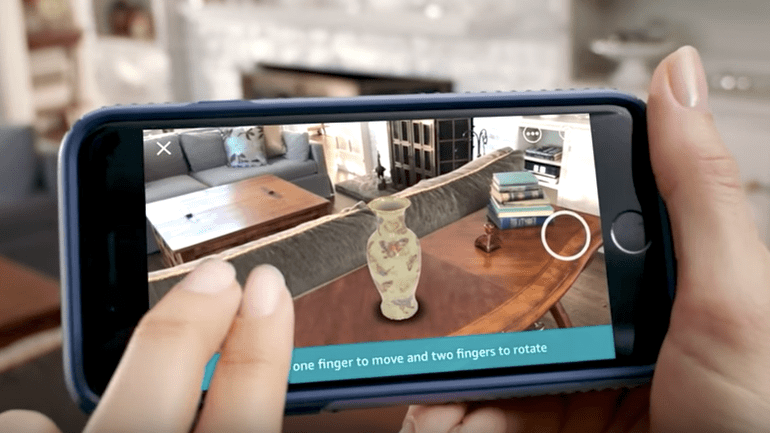
Augmented Reality is similar yet different from VR. AR is a live direct or indirect of a real-world environment whose elements are supplemented by computer-generated sensory input. An easy way to understand this complicated definition is by looking at the AR technologies that Amazon has developed. They have a feature where you can place an item that you are thinking about ordering in your home to see if it looks good. This helps people by them not needing to go through the trouble of waiting to see if the item looks good in their home after it has been delivered, causing them to need to package it back up to send back. Companies like Vespa are also using these technologies to enhance their sales experience. They have a tool online where you can customize your own Vespa, take it for a virtual test drive, and then locate a dealership near you where you can purchase it.
Another new technology that has increased in popularity in recent years is Holograms. Previously, Holograms have been used in film and seen as extremely high-tech. Today, politicians have used 3D holograms to give speeches as if they were there in the room. I think that this will become a more prominent and achievable technology in the coming years.
Lastly, Artificial Intelligence has come into play in recent media. This demonstrates the technological capabilities that people have these days. Additionally, it poses a threat to social media in terms of fake news. In this video, it demonstrates how people have the ability to take a video of Obama and manipulate his face and voice. This shows how people sitting at home can make a fake video whether it is Obama, Trump, or any other important and impactful person. As viewers in this new social media clouded the internet world, it is our job to understand these new technologies and how they work.
Public Relations is defined as a strategic communication process that builds mutually beneficial relationships between organizations and their publics by the Public Relations Society of America. As it is more commonly referred to as PR, this focuses on becoming newsworthy through storytelling.
“We govern what people think about.”
Edward Bernays
Edward Bernays is known for being the “Father of PR.” In 1928 Bernays published his work titled Propaganda which argued that PR is a necessity. According to Bernays, PR controlled what people thought and how they thought. An example of this is shown through analyzing why women smoke in the United States. Many years ago, it was looked down on when women smoked and the primary consumers of cigarettes were men. When the owner of Lucky Strike realized that he was missing out on half of the market due to women refusing to purchase cigarettes, he turned to Bernays for help. Bernays suggested that they speak to a psycho analyst and they suggested to promote cigarettes as “torches of freedom” for women. This was because many progressive women were beginning to revolt against men telling them what they could and could not do. Then, Bernays went to a women’s march and began spreading the word to women about lighting their cigarettes as torches for freedom. Within six weeks, women smoking cigarettes started becoming socially acceptable. This example highlights how Bernays showed how PR can not only impact sales for a company but it can also change the ways that people think in society.
Today, PR people not only work with journalists but also influencers in order to do the same. For example, I have been watching my favorite “beauty gurus” in their PR box unboxing videos. This is where my understanding of PR began. At first I was confused as to why influencers were sent an obscene amount of products for free, but in my studies of business and PR I began to understand. It is clear that companies choose to send people like Laure Lee for example, who has over 4 million subscribers on Youtube. Ultimately, they are hoping for her to promote their product to her millions of followers so they go and purchase it. It is more simple when it is broken down that way, yet this is where many people begin to get PR, Marketing, and Advertising confused.
Some misconceptions about PR are that they buy advertisements, they order journalists to write stories about their clients, they produce cute radio jingles, and they hand out free samples at the mall. In reality, PR is about promoting their clients, their products, and themselves. This is where many of the confusions between PR and Advertising come into play. Unlike advertisers, PR people persuade their external or internal audiences through unpaid or earned methods. They communicate with their audiences through trusted sources. Ultimately, their goal is it try and persuade journalists why their story is newsworthy.
When distinguishing the difference between PR and Advertising for example, it is easy to make clear distinctions. In Advertising, it is a paid way to build exposure in which they have complete creative control. The message that comes across in ads is, “This is important!!!!” But for PR on the other hand, it is an earned way to build trust and the media controls the final version of what it put out for consumers to see. The message that comes across is “This is important.” This is because the company has earned the right for it to be believed so due to the media promoting it free of charge. This is how the credibility is built when the New York Times or a Youtube influencer is talking about the product.
In asking the question, why is PR good for business? The answer can be drawn from these conclusions. PR creates credibility, increases awareness, it positions a company as an expert in its field, it humanizes companies through spokespersons. Bernays never could have imagined the world in which we live in now, but what he did know was that PR would be a pivotal piece of not only business but also societies to come. The Digital Era of Web 2.0 has taken this and shown its advancement in many more ways than just business in general. Social Media and the Internet has shown its importance and impact on society that keeps grown and changing no matter the time.
Citizen journalism is when the public plays an active role in producing and sending journalistic information out into the world. This has come into play in more recent history as anyone with a smartphone and internet connection can record or photograph something that is happening to share it on social media. This has sparked a debate among the journalism community whether or not citizen journalism is “real journalism.” Some argue, especially those who are journalists themselves, that every day citizens should not have the same recognition because they do not have the same experience and qualifications. This is due to the fact that journalists go to school, study, and work for years to be successful in the profession. On the other hand, people promote citizen journalism because they believe that it has major benefits in the Information Society.
Davies Merritt was the first person to bring this idea into fruition when he wrote about civic journalism. Although one has led to the other, people today claim that there is a clear difference between the two terms. Civic journalism is when journalists reach out to their viewers, listeners, and readers to find out what they want to know. This is then allows the journalist to send out the information that the people are interested in. In 1995, Nicholas Negroponte, an American architect, wrote in his book ‘Being Digital’ that the future of journalism on the internet was leading toward the consumers having the ability to have a voice in what they want. This has led to the area of the sharing space that we are familiar with today. With technology continuing to advance, we have had the ability to reach to a new territory where the consumers now have the power to produce their own information. This was something that only the journalists had the power to do through the television and radio prior to Web 2.0 and the integration of social media into everyday life.
There are many benefits that come with citizen journalism. First of all it is free. The only tool it requires is a smartphone which the average person already has invested in and carries with them at all times every day. Additionally, the information that is captured by citizens can add to a story that a journalist has done. For example, if there is a huge fire in California that a journalist is reporting on, they could use video footage from a citizen that was there before the camera crew and the reporter could reach the scene. Today, as this is becoming more and more of a reality, it is important for all citizens to keep in mind the principles of journalism. Some of the most important of these are transparency and precision. This is important in order to establish credibility and trust.
This is one of Britain’s biggest citizen journalism projects.
👇👇👇👇👇👇👇@BBCNews is asking the people of Wrexham to help set the news agenda for a week.
Citizen journalism is affecting the ways that we hear, see, and read the news every single day. Despite the conflict in its upcoming, this is the future. Technology, the internet, and social media have drastically changed the course of many careers in all aspects of life. As this is our reality, it is crucial for users to seize these changes and adapt, especially journalists.
Valentí Sanjuan is a 38-year-old journalist. He has quite a large following in the social media world: 362k followers on Instagram, 253k followers on Facebook, 197k subscribers on Youtube, and 118k followers on Twitter. All of this totaling at nearly one million followers across these platforms, it is clear that influencer is a large piece of Sanjuan’s job description. With his successes in being today’s modern journalist, this has come with the perks of being an influencer, like his sponsorship from Adidas and other companies.
Despite his success today, you could definitely say that Sanjuan started from the bottom. About ten years ago Sanjuan was fired from his job at a radio station. In less than a year he was bankrupt, his mother passed away from cancer, and his girlfriend left him. Sanjuan talked about that time in which he hit rock bottom causing him to have anxiety like he never had before. Because of this, he turned to running at night to cope. Through this, Sanjuan found happiness in athletics that he had been lacking in his life during that time. He decided to participate in an Ironman, which is a long-distance triathlon. The way that the Ironman works is that the contestants swim 2.4 miles, bike 112 miles, and run 26.2 miles, in that order.
“After that you decide if you rest, or if you rest in peace.”
Valentí Sanjuan, talking about finishing an Ironman Triathlon
Around this time was when social media like we know it today began to take off. Sanjuan decided to film the process of completing his first Iron Man. He trained for two months and then competed in the Ironman Lanzarote in 2013 with a total of 1800 contestants. By combining storytelling, content, and social media, Sanjuan navigated his way through becoming a social media star without any role models in this new territory of media.
Through using his journalism skills, Sanjaun created something that was very new to the internet at that time. By recording his story in the first person with a GoPro, he highlighted the pain and suffering of the journey. Today this video has over 500k views on Youtube. The thing that sparked interest and ultimately led to his following wasn’t purely the story itself, but instead his personality. Throughout the video story, it shows the way that Sanjuan kept positive and light-hearted energy throughout the extreme athletic strain he went through by cracking jokes. At the end of the video, the happiness and accomplishment of completing his first Ironman set an extremely motivational tone. As his social media following began to take off, so did his athletic passions. Today, some Sanjuan’s accomplishments have been completing 10 Ironmans in 10 days, multiple Ultraman’s, and this past year he did a Toroman.
Este va a ser el AVIÓN que vamos a llevar a los 2 Ironmans y 5 Ultramans de este año! Del 1 al 10, cuán enamorados estáis? 🤘💀⚡️ pic.twitter.com/7pdSnHtQKC
Over the years, Sanjuan has been the perfect example of how social media has changed so many things about the spread of information. As time has gone by, he just keeps coming back for more. Every year his athletic abilities have developed and the same can be said for the journalism side. Through documenting his experiences he has developed an inspired audience, which is the core of his influencer status. Through watching his story of the struggles that he endures in the intense races, Sanjuan’s fans feel connected to him. People that follow him feel an emotional connection to his journey.
After sharing his own story began to feel repetitive, Sanjuan decided to start focusing his content on the people that he met along the way. He said that one of the best parts of participating in these extreme athletic competitions was the inspiring stories of others. One of these was about Bebe Vio who is a paralympic fencer. She shared her story about losing her limbs and fighting her way to the Paralympics to do what she loved most. This is where Sanjuan has struck gold with his content. The unique stories of the people that came into his life through sports stepped up the motivational tone in all of his work. This sparked his followers to ask themselves: “What am I doing? What’s my excuse?” Whether that be accomplishing an Ironman, conquering a fear, achieving a goal, or stepping outside of a comfort zone, this element in his work allows for viewers to relate to the human emotions that the videos feature. Sanjuan said this element has been the key to his success and following. Today, Sanjuan has expanded his content to documentaries. In the Cape Epic 2019 documentary, he highlights the sports side and the human side of the race. Through this Sanjuan says he goes, enjoys, suffers, competes, races, and meets people with inspiring stories.
The avenue that Sanjuan has chosen to embark on in his journalism career is much different than the traditional media. Before the dawn of the Digital Era, journalists stuck to television, print, and radio. Today, journalists have the power to take their content and their stories on the go, anywhere and everywhere. The avenue that Sanjuan’s stories come in is at peak for the types of stories that he is putting out there. Today’s influencers have found that it is important to be fluent in all social media platforms that have a lot of traffic in order to grow and reach more people. In Sanjuan’s case, most of his core content relies on his Youtube channel and the other platforms are used to promote his work and brand deals.
According to Business Insider in 2018, Youtube had 1.8 billion users monthly. Today, many people’s favorite social media app to use is Youtube and this creates a great ecosystem for Sanjuan’s stories to exist. Over the years, his videography, editing, and content has evolved into a very professional level. Because of this, his following has continued to grow.
In terms of travel, the same type of content can be seen. Christian LeBlanc is an influencer with over 1.4 million followers on Youtube. LeBlanc’s channel is called Lost LeBlanc and his content highlights his travels all around the world. Through his videography and editing skills, LeBlanc has established a following that is different and similar to SanJuan’s all at the same time. Although the channels focus is not journalism based, LeBlanc uses his experiences to guide and inspire people in all terms of travel.
People do not buy goods and services, they buy relations, stories, and magic.
MoJo is a new form of journalism that is becoming more and more popular in recent years. Essentially, mobile journalism is media storytelling that is created through smartphones and internet connection. Now that it is common for most people to own a portable electronic device of some kind, they have the ability to produce journalism super simply. Videos, images, and recordings can all be shot, edited, and sent out to the media with the use of internet connection and very minimal gadgets.
Nick Garnett is a journalist at BBC that has had an impact on spreading the word about MoJo. He found that he could produce the same journalistic stories without a fancy camera or a crew. Garnett has shown the quality pieces that he has produced with simply his smartphone, a tripod, a microphone, and an internet connection. This has inspired others to take their journalistic work into their own hands and create content with the tools that they already have with them everywhere they go.
Huge news for mobile journalism. Edit on the fly and add post-production elements and formatting in Final Cut. #mojohttps://t.co/QlVlod0vgR
One of the positive aspects of MoJo is that you have your own freedom to create content anywhere. You can make a story just by using your phone to record and edit. This makes it easier for you to have full topical and creative control of your work. More positives are that it is very portable, cheap, and quick. On the other hand, the negative aspects of MoJo are ill-stability, poor lighting, and lower quality audio. Yet, all of these things can be improved with simple tools and tricks.
This concept is something that isn’t so foreign to my generation. For years people have been using their phones to record and edit videos for Youtube and other social media about their lives. This is just simply applying that to journalism and making it about telling stories. Thinking of it this way may even help others who have built a career off of making Youtube videos. At times I find myself bored when watching a vlog that had no plot. I’m likely to click off of a video of someone’s everyday tasks, but I find myself interested when there is action, a climax, and a resolution in the video. This morphs the content into a story, which is essentially the core of journalism.
I think that this concept can be applied to my travels so easily. I’m never without my phone and I’m constantly taking pictures and videos of what I’m doing. By adding in the basics of a story (the who, what, when, where, why, and how), facts, and interviews, you’ve got a journalistic piece. This has really shown me the true power of our smartphones in so many aspects of life. People today are creating their entire career through the use of smart phone content and social media. Studying this has inspired me to utilize the tools that I carry around with me in my iPhone.
In my opinion, it is extremely important to hop on the trends and changes in technology in all careers in order to stay the most competitive. I think that MoJo is a great example of the journalism world adapting to the new technologies that are a such huge part of our lives.
For more information click here to be directed to the Mobile Journalism Manual website.
This past weekend I traveled to Interlaken, Switzerland and, as cheesy as it sounds, it was the best weekend ever. This was something that my friends and I could not stop saying the entire time and I thought it would be the best way to describe my experience as a whole. My friends and I planned our trip through a program called Bus2Alps. When we arrived at the Geneva airport we were greeted by the Bus2Alps staff and we got on huge busses for our 2.5-hour drive to Interlaken. While en route the staff told us that the weather in Interlaken is completely unpredictable and they warned us to be flexible with our activities. The weather app on my phone said that it was predicted to rain the entire weekend, so I kept my fingers cross and an open mind. When we finally arrived at our hostel, which was called Youth Hostel, it was nearly 3am so we went straight to bed. The next morning we woke up early and quite literally hit the ground running.
The first activity that we chose to do was going up into the mountains. A van took us up to a gondola where we took our snowshoes and skis up. After that, we abandoned our sleds at the sole restaurant up there and began our journey. I did not expect snowshoeing to be easy but I also was totally unprepared for how difficult our climb would be. When I had imagined this activity I thought we would be taken all the way to the top of the mountain to explore, but I was very wrong. What we did was an intense hike (keep in mind that I am indeed out of shape) up the mountain for about an hour. On the way up most of us took off our jackets and gloves because the sun was beating down on our backs. When we finally reached the peak of our hike, I was finally able to take a look around and I was overwhelmed. It was a beautiful sunny day in the middle of January and I felt so lucky and happy. It could have easily been snowing or raining or foggy, but it wasn’t. We lucked out with the best possible conditions to go snowshoeing up in the mountains.
As we began our descent the group was filled with smiles and laughs. Snowshoeing up the mountain was physically difficult, but snowshoeing down was difficult in another way. I found that with each step down the snow was coming up to my knees. It was very easy to slip, and I did, many times. When we reached our starting point where we had left our sleds we abandoned our snowshoes and sat down for a fondue lunch. The lunch consisted of hot tea, cheese fondue, bread and potatoes to dip. The food was amazing and the view made everything taste even better. From here we sledded down to our original starting point, which was the distance that we had taken the gondola up. This, yet again, showed my nonathletic abilities but I still enjoyed every second.
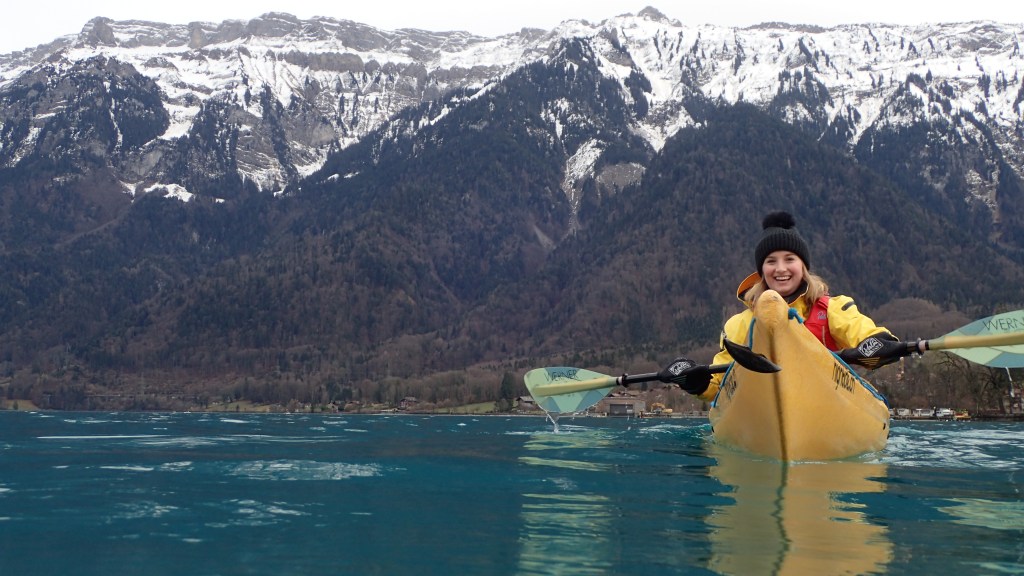
After it was all over we still couldn’t stop smiling. We went from the hostel and walked to Lake Brienz. The mountains looked golden as the afternoon sun beamed on them and the sky turned cotton candy pink. All we kept saying was, “Best day ever!” over and over again. The rest of the weekend followed in this same pattern. It was full of chocolate-covered strawberries, more cheese fondue, kayaking, and endless smiles. This trip is definitely going to be hard to beat and it is an experience that I truly will never forget.



 The Yellow Brick Road