
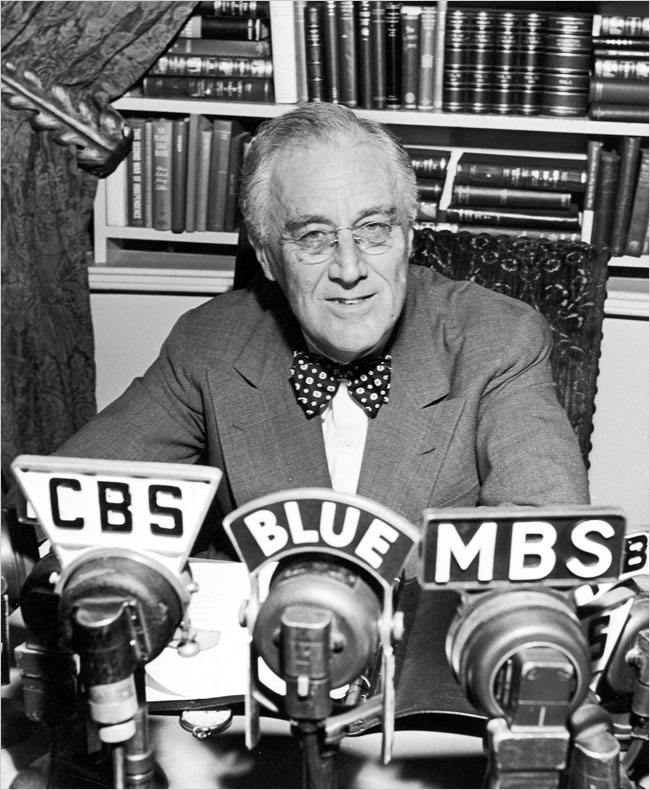
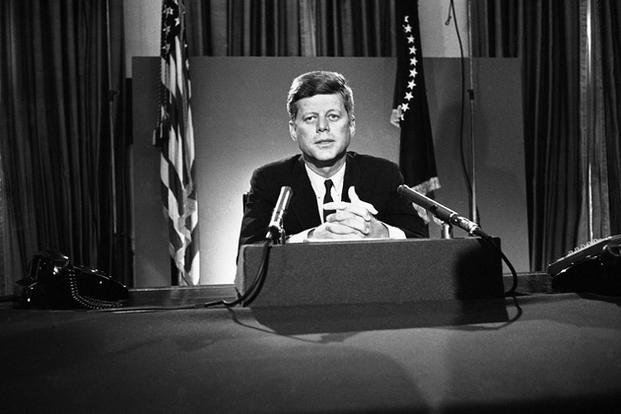
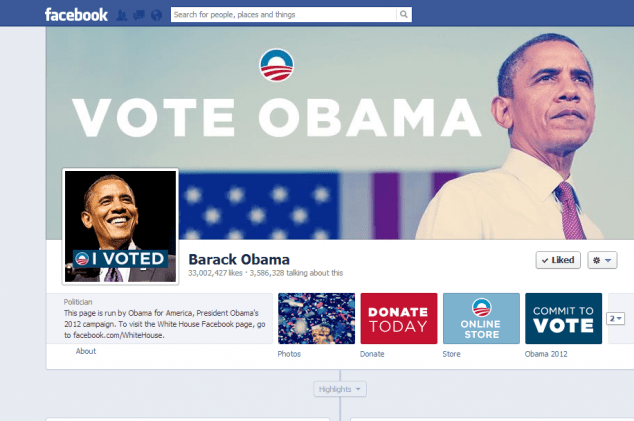
The ways that politicians campaign and govern have been changing in recent years. Meaning, the tools that they use and the ways that they use them in order to connect with the American people. When it was Franklin D. Roosevelt, his main tool was the radio. When it was John F. Kennedy, his main tool was the television. When it was Barack Obama, his main tool was social media.
Sources:
https://ssoltanhistory.weebly.com/fireside-chats.html
https://www.weareaccess.co.uk/blog/2012/11/obama-wins-was-social-media-real-winner
Round one of social media in politics and the first digital strategy played was in Obama’s 2008 campaign. He recognized that most people are truly not interested in politics, but they are interested in topics that affect their lives that can be connected to politics. In order to get their attention Obama needed to directly speak on things that people cared about. Obama knew that the future of politics needed to be addressed to individuals, maybe groups but not everyone in society and he used social media in order to do this. The outlet that worked well in his campaign was Facebook because he had the platform’s co-founder, Chris Hughes, on his team, who was 24 years old at the time. On Facebook, Obama was able to connect to Generation Y, or people who were born from about 1980 and 1995. This was because Generation Y tended to not trust television and conventional political speeches. Obama understood that an important part of a political speech is not developed on political forums. This is why he became a member of many other platforms as another user, to speak with people and listen to them about what they wanted. Additionally, he created MyBarackObama.com for users to create groups in order to discuss and debate their points of view and opinions. On this site, people could also communicate directly with Obama’s team about things they did not like and he was able to change his approach. Today, that site is called BarackObama.com. Overall, the point of this is not to say that Obama won in 2008 solely because of social media. The truth is that he combined Politics 1.0 and 2.0 in order to attain his goal. Some of the tools that he used were his slogan “Hope,” going door to door, merchandising, MyBarackObama.com, responding to his followers on Twitter, his 6 million Facebook friends, free advertising on YouTube, and his blog that was posted on 10 times a day at least. Obama then carried his social media use into his term after he was elected.
Round two of social media in politics was when Obama ran in 2012. Obama upgraded his social media platforms to match with the times. He used Facebook, Google+, Pinterest, Tumblr, YouTube, Flickr, Instagram, Spotify, and his two twitter accounts that were @BarackObama and @Obama2012. His opponent, Mitt Romney only used Facebook, YouTube, Flickr, Google+, and Twitter. To compare their reach on Twitter, Obama has 21 million followers and Romney only had 1.5 million.
Round three of social media in politics was the extremely controversial campaign of Donald Trump in 2016. Answering the question of whether or not Facebook was the reason for Trump’s win is more complicated than a yes or no answer. Most news outlets supported Hilary Clinton or avoided supporting Trump but this was obviously not relevant. Social media, especially Facebook, polarized the points of view of the voters due to the algorithm’s use of filter bubbles in order to give people content that they agree with. This is where fake news surged because there was no clarification. At the time more than 160 million Americans used Facebook. During the presidential race, mainstream news had an engagement of over 7 million, but fake news had an engagement of over 9 million. I have seen this first hand with my grandmother and her friend’s use of Facebook. More often than not, my grandma is posting some crazy and extremely political rant on her Facebook page. She argues with her friends that have opposing points of view. They also send each other articles back and forth. Many times, when I take a couple of seconds to evaluate these articles, they are “fake news.” Some of which are true to its definition in that they are completely false and fabricated. But, others are so incredibly biased opinions that lack any kind of fact. Yet, Facebook spoon-feeds them these articles because that is the area in which they have the most engagement. Going back to the initial question, the answer is still hazy. Was Facebook responsible? How about fake news? The polls predicted Hillary to win, yet Google said Trump was winning. This was because Trump was noisier in terms of organic search, yet not all of the noise was good. In terms of earned media, Hilary spent $28 million and earned $746 million for free, but Trump spent $10 million and earned $1.8 billion for free. Trump spent nearly a third of the amount that Hilary did, yet he earned so much more. His approach on social media was similar to the Republicans before him because he used much less than his opponent. Trump’s social media tools were Facebook, Twitter, Instagram, and YouTube. Hilary used Facebook, Twitter, Instagram, YouTube, Pinterest, LinkedIn, and Medium. The difference in their approaches was that Trump focused his message on the big social media platforms while Hilary spread her message across many platforms in which it got lost.
 The Yellow Brick Road